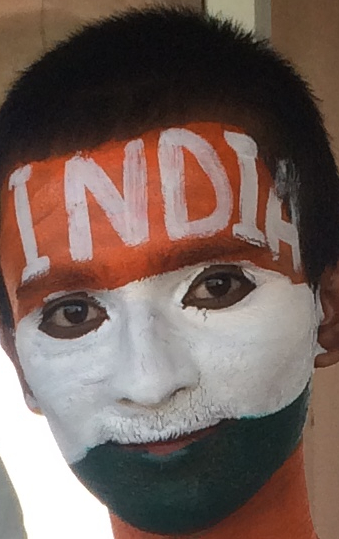
This is a passionate young Indian cricket fan in November 2016. I took his photo while watching a match between India and England in the city of Rajkot in the state of Gujarat. On the first day of the game the crowd’s attention was distracted by two seismic simultaneous political events happening outside the stadium.
Donald Trump was elected as President of the United States.
Closer to home, the Indian Prime Minister Narendra Modi had caused mayhem and panic across his country by a draconian overnight announcement. He had decreed with immediate effect that all 500 and 1,000 rupee notes (around £5 and £10) would no longer be legal tender.
It was a drastic move aimed at stamping out corruption and illegal cash holding. Much of India descended into chaos. Millions of desperate citizens queued outside banks as they struggled to adapt to the new regulations.
It was clear to me then that Mr Modi is not one for half measures. And he revealed his decisive and bold streak again just over a week ago. Then he announced an immediate 21-day total lockdown across the whole of India in a bid to contain the spread of covid-19.
We have become used to witnessing many jaw-dropping events during this crisis. But this has be one of the most astounding. Around 1.3 billion souls in a diverse, crowded and dynamic country ordered to stay at home with less than four hours warning. Probably the most stringent measures imposed by any democratic country during this pandemic. And they were introduced when only 519 coronavirus cases had been reported in India with just ten deaths.
It’s sobering to read the full edict announced by the Indian government. The economic and social impact of such an immediate shutdown was even more severe than what we have witnessed in the west. Millions of poorly-paid migrant workers were suddenly trapped far from their homes.
The Prime Minister took his radical decision in the face of some alarming scientific modelling. This showed there could be 300-500 million cases of the virus across India by the end of July if nothing was done.
Even more frightening was the estimate that up to 10 million people would become severely ill and need intensive care facilities. This would, of course, have totally overwhelmed India’s healthcare systems. Read this grave first-hand assessment by a leading Indian epidemiologist here.
A few days ago Mr Modi spoke frankly to the nation in his regular radio address called Mann Ki Baat or heart to heart. He twice apologised for imposing these harsh steps, which he acknowledged had caused great hardships, especially for the poor. Mr Modi said India was now engaged in a life and death struggle. He then uttered a Sanskrit saying: “evam evam vikar, api tarunha saadhyate sukham.” This means: “an illness and its scourge should be nipped in the bud itself.”
When I watched that cricket match in Rajkot in 2016, I met another ardent Indian cricket fan. His name is Dilip, a family man who works as a manager at the huge port of Mundra on the west coast of Gujarat. I have been in touch with him regularly since, usually to discuss our passion for cricket.
But during the current crisis we have been chatting even more frequently. In early March, Dilip told me that many Indians had been watching the spread of the virus in Europe with growing alarm. He said they could not understand why European governments were not taking immediate drastic action in closing borders and locking down affected areas.
Now Dilip is in total lockdown with his wife and two children on a compound owned by his employers. He is hoping that the extreme heat of the upcoming Indian summer might help contain the virus.
But he remains stoical and told me: “India with its population of 1.3 billion and limited health infrastructures is staring at perhaps the most crucial battle the world has to offer against this pandemic….. These 21 days of lockdown are buying us the time to prepare like never before for what may be a huge task in human history… and learn from mistakes that other countries have made and be precise with our reply to the pandemic in the best democratic way.”
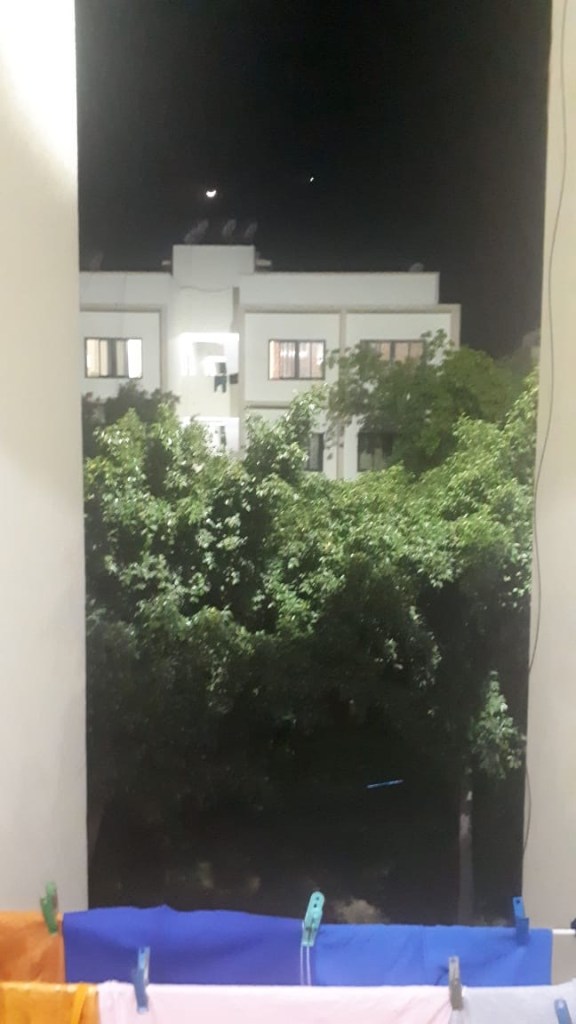
While Dilip and his fellow Indians wait anxiously to see whether Mr Modi’s extreme measures will avert a catastrophe, he is becoming used to this night-time view from his window.
 globalwindow