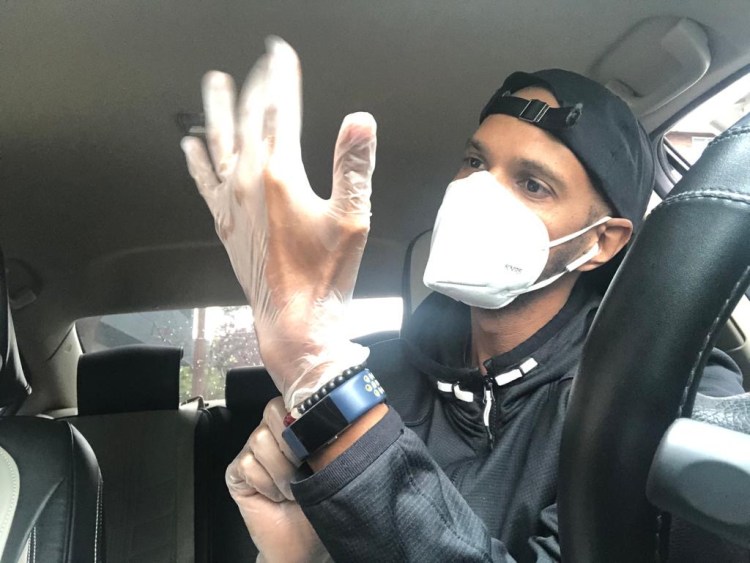
California calling. This was my friend Yemane’s safety routine yesterday before setting off on a shopping trip in the northern suburbs of Los Angeles. The city has been in lockdown since last month and Yemane has been taking precautions for some time when he goes out for essential supplies. However, last week the LA city mayor urged everyone to cover their mouths and noses by using home-made masks such as bandanas. The mayor’s message is now being echoed by the authorities all across America.
It’s not just in the United States that mask-wearing by the general public is becoming a big issue. Scientific opinion appears to be shifting. Many now believe that wearing masks may be effective in preventing virus droplets being spread, especially by individuals who are asymptomatic. Over the weekend the authorities in Lombardy region, one of the epicentres of the pandemic in Italy, passed a law requiring citizens to wear some sort of face protection.
Elsewhere in Europe friends in the south of France and in Madrid told me yesterday that they had been wearing some sort of face protection for some time – along with many other citizens in their countries. I even had a call from a friend in Ethiopia saying people there were using whatever material they could to cover their faces and berating me for not doing the same here in the UK.
All this activity has partly been sparked by a change of heart by the World Health Organisation. In the past it has been reluctant to sanction the widespread wearing of masks during epidemics. This is partly because people might try to buy up supplies of surgical-type masks badly needed by front-line health staff. However, at the end of last week a senior WHO spokesman said:“There may be situations where the wearing of masks may reduce the rate at which infected individuals infect others.”
The face mask drum has been beaten for some time by the Czech Republic which has mandated all its citizens to wear them. Another friend in Ethiopia sent me a link to this very powerful public service video from the Czech Republic. It urges the world to follow its example in promoting face coverings.
All this comes as no surprise to residents of East Asia where mask-wearing has been a feature of public health etiquette for many years. I remember being surprised on my first work trip to the region – to Japan in the early 1990s – when I saw many people wearing cotton masks because they had a common cold or flu. It is all part of the region’s societal outlook that individuals are keen to go the extra mile and not to harm others by passing on infections.
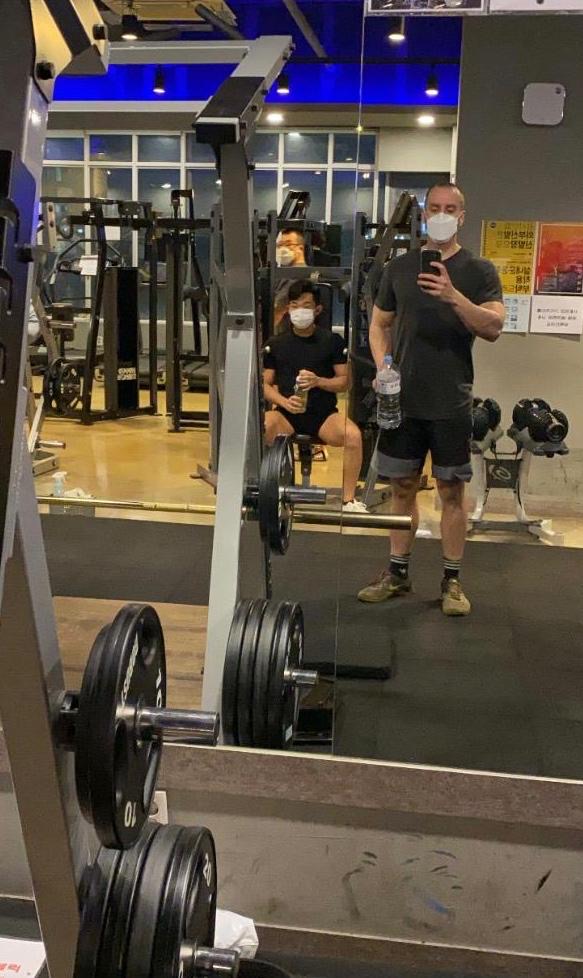
During the current pandemic I have heard regularly from both my sons who currently live near Seoul. They tell me virtually no-one goes out on the streets in South Korea without some sort of mask. One son, Tim, tells me it is compulsory to wear a mask while exercising in his gym even though it’s awkward while working up a sweat. Most gyms, leisure centres and restaurants have remained open throughout the crisis in South Korea – but that’s another story which I hope to tell in a future blog.
If Tim’s mask should happen to slip while pumping iron, a beady-eyed instructor will come over and scold him to ensure his nose and mouth remain covered up.
Some countries of course are not yet advising their citizens to use face masks. Unprompted, I had an email from friends in Australia this morning, who told me friends in the US had offered to send them some face masks. They had politely turned down the offer as the local authorities do not recommend wearing them as the benefits are not proven. Some say home-made masks are unhygienic, can lead to a false sense of security and distract people from social distancing.
The British government is taking the same line as Australia. The deputy chief medical officer for England, Professor Jonathan Van-Tam, was asked about this issue last Friday at the UK government’s daily briefing. He stated baldly that there was no evidence that mask-wearing by the general population stopped the spread of the disease.
As a result, the British government was not recommending this policy. You can see the Professor’s brief remarks here. It is certainly not part of the British cultural make-up to wear cotton masks in public. During my rare visits to my local supermarket I have seen only a few people wearing one.
This is actually a much complex issue than it would appear. It has been debated by scientists for many years. However, it’s worth noting two other contributions to the discussion.
One was a comment by the medical magazine, the Lancet, which said that the lack of evidence is not the same as evidence of absence. And it’s worth reading in full this recent influential research paper by scientists at Yale. They are now strongly shifting the argument in favour of wearing face masks during the Covid-19 outbreak.
 globalwindow
How refreshing to have a truthful,non-political input in these times of spin. Thank you
LikeLike