SIGNS OF HOPE

Photo: Creative Commons

At last  – a chance to hope during this depressing Covid-19 outbreak. Of course there is still a long way to go before the promising Pfizer-BioNTech vaccine hopefully brings the pandemic under control. But this welcome rush of optimism has inspired me to revive this blog. 

And boy did we need this good news. Since my last post way back on 15 June the total number of Covid cases in the world has soared from  8.1 million to 51.2 million. The global death toll has risen from 453k to 1.26 million. 

During the summer in western Europe and the United States we thought we could relax a little as the impact of the pandemic appeared to be receding. But recently we have been brought up with an almighty jolt as the virus has returned with a vengeance during the colder weather. Many countries have been seeing an alarming spike in cases, hospitalisations and deaths.

Just look at America. Case numbers since the middle of June have gone up from 2.2 million to 10.13 million now and deaths from 121k to around 240k. 

In the UK, the numbers have also been going in the wrong direction once again. Cases since my last post have gone up from 269k to 1.14 million and deaths have increased by around 14k to 49k. (NB these figures take account of the UK government’s decision to reduce the official death toll by 5k in August)

Throughout this time I have continually been well aware that countries in east Asia and the south Pacific have continued to handle the pandemic much better than the west. The populations there have been under some restrictions but their economies have generally remained open and daily life is near normal.

Top of the tree is Taiwan, a country of around 24 million. Since my last blog post on June 15 the number of Covid cases there has risen from an overall total of just 445 to 577. To repeat that. Not cases per day – yes, incredibly 577 is the TOTAL number of cases Taiwan has had since the outbreak of the virus in January.

And look at this graph highlighting the number of deaths in Taiwan. It was just seven back in June then and is still seven now.
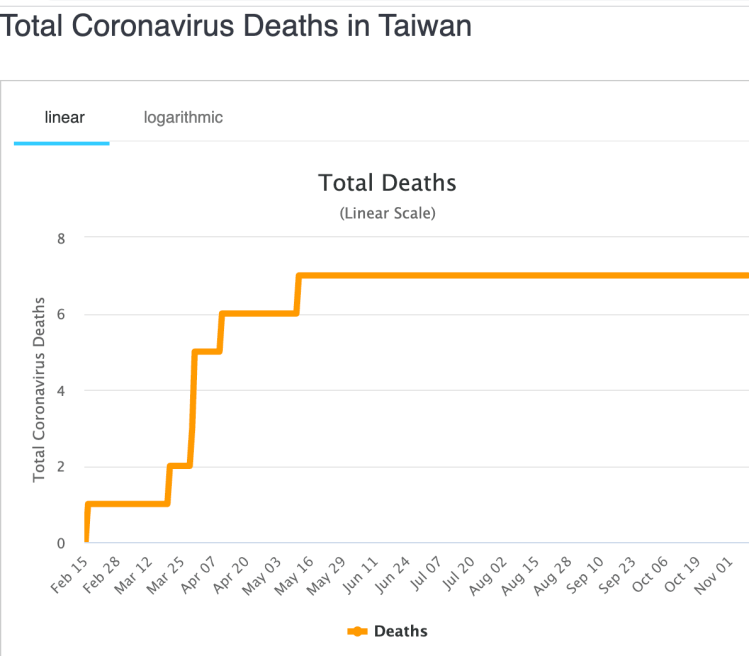
Source: http://www.worldometers.info

It’s hard to get your head around this graph. But surely it gives us all hope that Covid-19 can be contained. I know have already written about the Taiwan blueprint before in this blog but it is more relevant now than ever.

Amid all the bickering in the west about how to protect the vulnerable, the economy and personal freedoms, why have we not been paying more attention to Taiwan and other Asian countries? Why haven’t we been putting lessons from there aggressively into practice? This seeming lack of will of western leaders to robustly take the record of east Asia on board is something else I can’t get my head around.

Experts such as Professor Devi Sridhar of Edinburgh University point to three building blocks which have driven the success in east Asia. Strong border controls; robust, consistent and clear advice to the public to avoid crowded places; and an effective test, trace, isolate and support system. Read one of Professor Sridhar’s latest articles here.

Many countries in the west have flirted with some or all of these approaches to a greater or large extent but clearly have not been rigorous enough. East Asian countries acted quickly and decisively unlike many countries in the west. It’s not too late now for the west to change tack and strive hard to suppress the virus as much as possible in the next few months. After all, any effective mass roll-out of promising vaccines is not likely to happen until well into next year.

In the west it is hard to keep a cool head as the fight against the pandemic has become increasingly politicised, including over the quality of the data informing the public about the progress of the virus. Amid all the chaos I have found the Independent Sage group in the UK to be a reliable source of information. The accessible weekly briefings given by Professor Christina Page are refreshingly authoritative, calm and free of political histrionics. Well worth a look.

So it’s great to be talking about hope for a change. The Pfizer-BioNTech  vaccine and others on the horizon provide some immediate grounds for optimism. But there can also be hope for the longer term beyond Covid-19 if and when the next dangerous type of virus emerges globally. It’s reassuring to know that we now have a proven template from east Asia for maintaining some sort of control. Hopefully in the future we can avoid the desperate experiences that have been endured this time in many parts of the world.
Moving On?

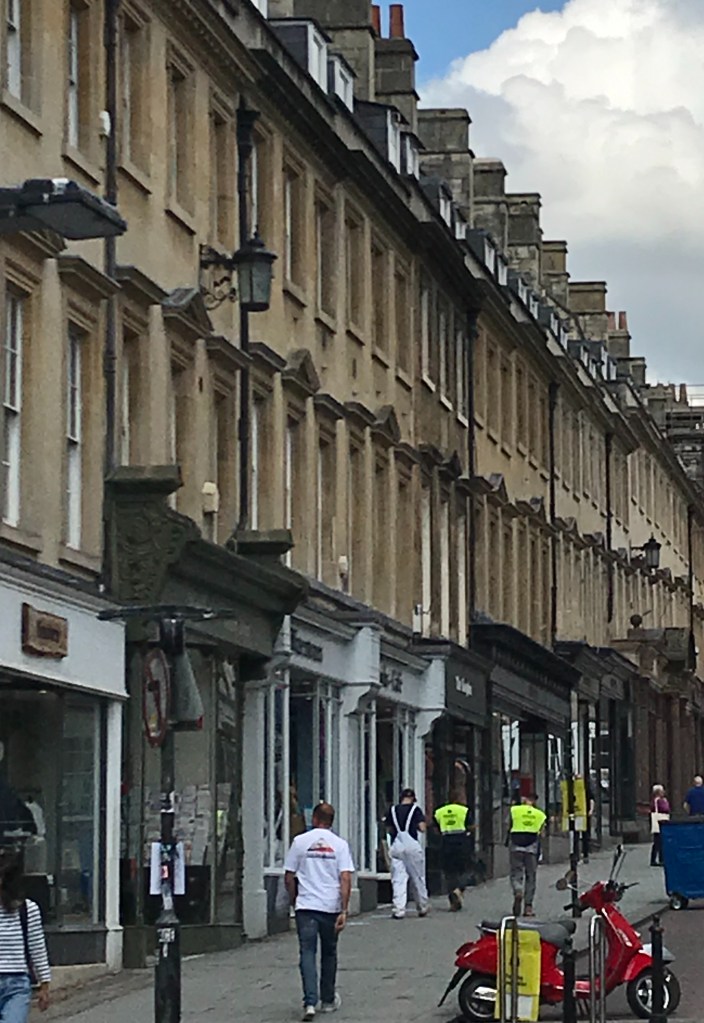
Milsom Street today – one of Bath’s main shopping streets

In different parts of the world today there are many changes in the air as various lockdown measures continue to be eased. Thailand has lifted its curfew of more than two months; local trains in the Mumbai area are starting to run again; several land borders across parts of Europe are reopening; and restaurants in the Paris area are doing business once again.

Here in England, though not in Scotland and Wales, non-essential shops are throwing open their doors today. So it’s possible once again, if you’re that way inclined at the moment, to go shopping on the High Street for items such as clothing, shoes, electrical goods and books.

The reduction of the restrictions in many parts of the world is partly driven by economic reasons and partly because of perceived and/or real progress in tackling the virus. For many of us at this juncture, it is perhaps an opportune moment to look back at the last few weeks of lockdown and reflect on the individual experiences we have been through.

For each one of us, it has been a strange journey so far having to deal with unprecedented internal and external pressures. The novelist Michael Faber has been writing about what he has learned during lockdown and provides some useful advice. Faber said:

“If there’s one thing I hope to carry away with me from this strange period, it’s an enduring awareness that we’re all living through a different reality, despite the media rhetoric about how we’re in this together. Some people in the second world war had “a good war”, in the sense that they learned new skills, were emancipated from sexist constraints, went on adventures, even made money. Others had a very bad war, suffering torture, bereavement, the destruction of every dream they ever had. We mustn’t presume we understand what this pandemic was like for another person until they open up and tell us.” 

Faber’s comments are contained in a thought-provoking article in which various writers give their own individual insights on being forced to stay at home over the last few weeks.

For most of us the impact of the pandemic is far from over and it may be a long time before we can fully move on. Some of the lockdown easing allowed today may have to be reversed if infections spike again. And, of course, in some parts of the world, such as Brazil, Chile, and Pakistan, the number of Covid-19 cases is rising alarmingly.

However, to end on a positive note, it was very uplifting to see that New Zealand lifted all its lockdown measures last week after the nation declared itself virus-free.

Africa matters

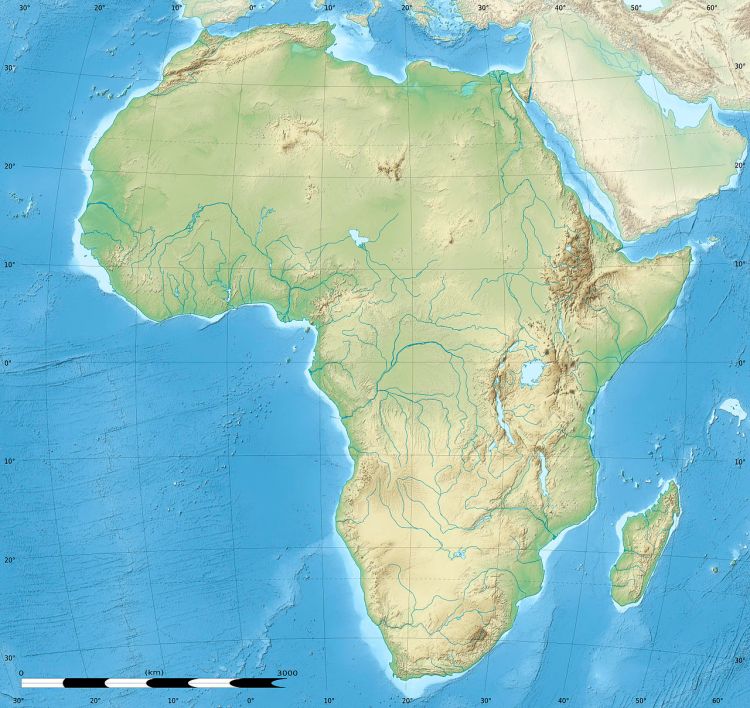
Image: Eric Gaba, Wikimedia Commons

As noted a couple of weeks ago, many African countries are straining every sinew to try to contain the coronavirus. Up to this point their efforts appear to have had some success.

After all, the pandemic on the African continent has so far not been as catastrophic as many international observers originally predicted. Some African commentators believe these predictions may have arisen because of a bout of Afro-pessimism.

The Senegalese academic Felwine Sarr has argued that “the Europeans are worried about us but over here we are worried about them.”

This quote is contained in a detailed paper by Douglas Alexander, a former UK Secretary of State for International Development. The paper outlines Africa’s response to the pandemic and says it is also vital that the international community increases its support for the continent’s struggle.

The paper concludes by saying that until everywhere is safe nowhere is safe. As the Ethiopian Prime Minister, Abiy Ahmed, has said:”If the virus is not defeated in Africa, it will only bounce back to the rest of the world.”

Similar observations are contained in this King’s College blog post. It says that Covid-19 has demonstrated just how interconnected our world is and explains why it will be in the UK’s interest to support developing countries through the economic challenges ahead.

The post is written by Professor Andy Sumner and Visiting Professor Myles Wickstead, whom I know from Ethiopia in times gone by.

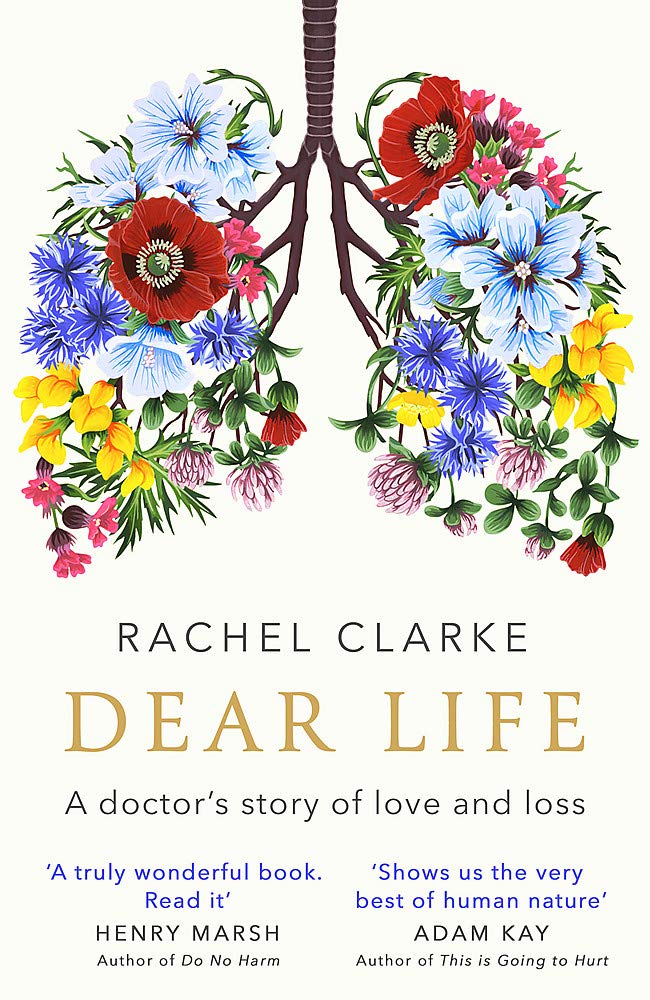
Dear Life

The cover of Dr Clarke’s most recent book

When I began this blog I said I wanted to go behind the headlines and present first-hand, informed global insights into the pandemic. Many perceptive primary sources have indeed been referred to on this site. But I think today’s eye-witness contribution is one of the most moving and authoritative yet.

I want to highlight this remarkable piece of writing by Dr Rachel Clarke. She is a palliative care doctor, whose latest book Dear Life revealed her humane approach to medicine.

Although she is British, Dr Clarke’s insights into our responses to this pandemic are relevant to everyone in the world.

Her main emphasis is on urging us to keep the focus on the individual patients hit by this disease. In her article today she presents this withering rebuke to governments, policy-makers and experts:

“The true metric of success in a pandemic is simple, the overall number of deaths prevented.

“The point of our response to coronavirus is not to flatten curves, ramp up headlines, or invent mathematically nonsense equations: it is the prevention of unnecessary dying.”

Dr Clarke’s background is as a current affairs journalist but I hope her observations as a doctor will challenge us to think way above our normal level of political discourse and allegiances.

Africa responds

Image: WHO/Otto B

Fears that Africa was going to be cataclysmically overrun by the virus have so far not materialised. A WHO Africa briefing says that the pandemic, which has struck with such devastating force in much of the world, appears to be taking a different pathway in Africa.

The briefing was released as the number of Covid-19 confirmed cases on the African continent reached one hundred thousand. It says that in comparison to Europe at this stage Africa is reporting fewer deaths. Possible reasons include Africa’s large population of young people and swift action to introduce lockdowns.

Some believe that African governments are not getting the recognition they deserve from their response to the pandemic.

There’s still a long way to go before African countries can breathe easily – and, of course, the slowdown in global economic activity because of the pandemic is still threatening to hit the continent hard.

Tales of our cities

Manhatten skyline (Image: Wikimedia Commons)

New York. New York. One of my favourite cities. Badly hit by the virus but now slowly recovering. Many other cities across the world have also been severely affected, including London, Tehran, Wuhan, Milan, Sao Paulo and Madrid.

How have these experiences changed our cities and their inhabitants? What lessons for the future will be learned by the leaders of our great urban complexes?

Here are some thought-provoking and readable predictions by twelve of the world’s leading urban thinkers. They are quoted in an article in Foreign Policy magazine, which has also run think-pieces on how the pandemic will change the global economy and government powers.

Global pandemic update

Graphic: Financial Times

Just wanted to share this rigorous detailed analysis from the Financial Times, which shows that the number of global deaths from the virus is slowly decreasing. You can read all the data here.

Despite the overall downward trend, there are still many serious problems across the world, including some new hotspots such as Brazil and Russia.

The analytical tools used give details about individual countries and also examine issues such as excess death rates in key cities across the world.

The Financial Times normally has a paywall but is providing all its Covid-19 articles for free.

The eyes of the world

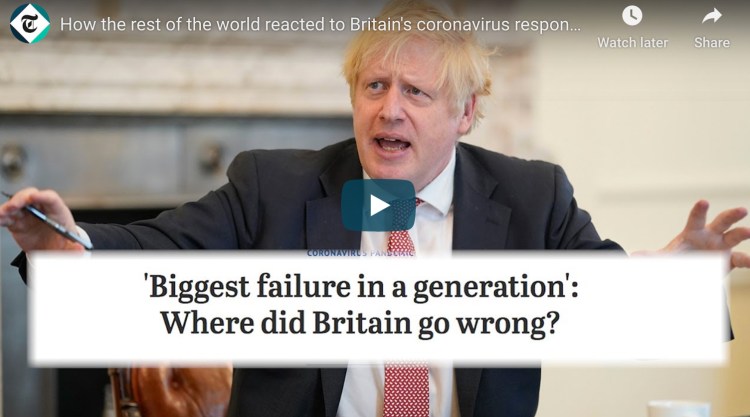
The headline image of a recent Daily Telegraph youtube video

It’s something of a surprise to see an image like this in the Daily Telegraph, criticising Britain’s handling of the pandemic. After all, the right-wing newspaper is normally a strong supporter of the UK government – and, of course, is also a former employer of Prime Minister Boris Johnson.

Look carefully though and the image is not entirely what it seems. In the small print at the top you can see that the Telegraph is not directly condemning the prime minister in this youtube video. Instead the paper is showing how various media from around the world have been pointing out mistakes made by the UK government since the onset of the virus.

Nevertheless, it’s still an eye-opener that the Telegraph has given space to so many of these international critiques, both in this video and in its columns.

This global criticism was sparked off by last week’s figures showing that the UK now has the highest official number of deaths in Europe from the virus. This meant that the eyes of the world have been on Britain, never a comfortable position to be in. Most of us – whether as individuals or members of groups of any kind – find it hard to deal with any outside criticism.

Yet people beyond our normal circle can sometimes see things that we ourselves are blinded to, either wilfully or sub-consciously. Of course, external critics may sometimes be unfair, untruthful or just plain wrong. But often they can be of help in pointing out obvious and constructive truths without fear or favour.

I’m reminded of the famous Hans Christian Andersen fable in which we all know that a small child, free of any group think, is able to point out that the much-feted and well-dressed Emperor is in fact wearing no clothes.

The eyes of the world have continued to be on Britain this week too as Boris Johnson announced tentative steps to ease some lockdown restrictions. His speech sparked off another flurry of criticism in newspapers across the globe.

The New York Times also devoted its daily podcast to an interview with its London correspondent about how Britain has fared during the pandemic. As a Brit, it’s sometimes an uncomfortable listen but it’s also revealing to hear an honest outside opinion.

Over the past few weeks many in the UK have often turned their eyes to the United States and criticised President Trump’s inadequate public health response to Covid-19. It’s unnerving now when the boot is on the other foot.

The governments of the UK, the US and several other countries, including China and Belgium, have all publicly bristled when criticised during this crisis. One can only hope that our leaders will privately take on board justified criticism and learn lessons from any mistakes made. But, as the phrase goes, I’m not holding my breath.

All that said, let’s end on a positive note. While watching the performance of other countries, we can also learn from their successes as well as their mistakes.

For example, here’s an uplifting story about a dogged health minister in the southern Indian state of Kerala. Her name is KK Shailaja, otherwise known as the Coronavirus Slayer. She’s acquired the nickname because of her early and painstaking preparations to ward off the worst effects of the disease.

The interview was carried out by Laura Spinney, who has written an engrossing book called Pale Rider about the Spanish flu pandemic in 1918. But that’s another story!

The Taiwan Model

Taipei, the capital of Taiwan (Image:Wikimedia Commons)

As countries in Europe move warily to lift some of their lockdown measures, Taiwan’s handling of the pandemic continues to stand out. The Taiwanese government has reported only 440 cases of Covid-19 in total with just seven deaths.

I have been puzzled for some time by these dramatically low figures and why we have not heard a lot more about them. We know a little about some of the possible reasons, including Taiwan’s experience in fighting SARS, and early testing and rigorous contact tracing. But I wanted to find out more.

As a result, I have been reading the Taiwan government’s own description of what it calls the Taiwan Model. It’s well worth reading all the seven short articles covering issues such as Taiwan’s advance planning and its early responses to the pandemic. Of course, these official papers put the best gloss on Taiwan’s approach. But it seems hard for anyone to ignore the conclusion that its apparent success so far has been characterised by bold, rapid, and decisive interventions.

Taiwan sprang into action as soon as China alerted the WHO on 31 December last year that an unknown respiratory disease was circulating in Wuhan. Despite Taiwan’s complex and tortured political relationship with China, there are extensive business and other contacts between them.

The Taiwanese government was therefore immediately alert to the danger of the disease spreading. Straight away it announced measures to begin screening passengers arriving by plane from Wuhan. Just two weeks later on 12 January a public health team from Taiwan was allowed to visit the centre of the outbreak. It concluded this was a dangerous virus likely to be transmitted by human to human contact. After this there were no half measures in Taiwan.

In Europe we have heard a fair amount about the lessons to be learned from South Korea and Singapore where the pandemic has also been contained to some extent. But my impression is that Taiwan’s experience has not been examined in as much detail. Could this partly be because Taiwan is seen as something of an outlier because it only has diplomatic relations with a few countries in the world?

Taiwan is not recognised by the UK and the EU as an independent country. They back China’s claim that the island of Taiwan is part of its territory under the One China principle. Has Taiwan’s blueprint for success in handling the pandemic therefore been somewhat out of sight and out of mind?

Taiwan’s wish to exchange detailed information about fighting the pandemic is further complicated because it is not allowed to be a member of the UN. It is therefore not part of the WHO. Taiwan used to have WHO observer status but this was suspended following objections by China amid rising tension in recent years between Beijing and Taipei.

All this diplomatic strain is coming to a head as Taiwan has requested to take part as an observer in a major WHO meeting next week. President Trump is using this as an opportunity to put pressure on China, which he claims is dominating the WHO. Although the US does not recognise Taiwan, they do share a defence agreement in what’s known as a policy of strategic ambiguity.

The United States, which has currently suspended its funding to the WHO, is now pushing for Taiwan to be granted WHO observer status. Australia and New Zealand have declared their support but the issue remains fraught. See this article in the South China Morning Post.

It remains to be seen whether the lessons for international public health from the Taiwan Model will continue to be largely lost amid a welter of political and diplomatic bickering.

A refugee’s story

Achut and her three sons (Photo: New York Times)

A very straightforward post today. I simply want to share an amazing audio interview on the New York Times daily podcast with Achut Deng, a refugee from South Sudan. She’s a 35-year-old single mother and now lives in South Dakota in the United States after surviving civil war and malaria in Africa.

Achut’s story is especially relevant as she is currently a worker at a meat-packing plant in the city of Sioux Falls. It’s one of many such factories hit hard by Covid-19 in America.

Achut’s testimony is deeply moving as she reveals many of the pressures of being a refugee in a foreign land, especially during a pandemic.

Above all, Achut’s humanity shines through and is an inspiration. For me it was a half hour very well spent.

You can listen to the podcast here. You can also read a transcript of the interview.