One of the highlights of any holiday or festival is looking forward to and eating a special meal. And few countries do special cuisine better than France.
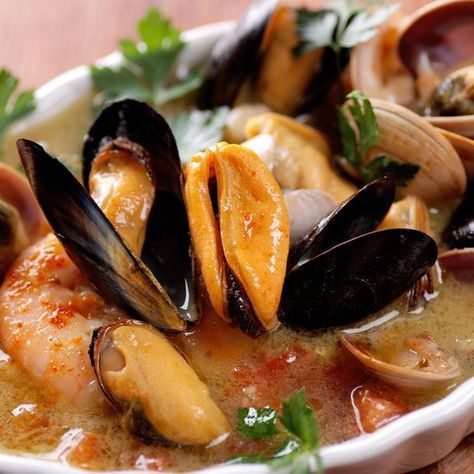
This is certainly the experience of an English couple I know who live on the Mediterranean coast not far from the French city of Montpellier. A couple of days ago they sent me the menu for an exceptional seafood takeaway they have ordered from a local restaurant for today’s Easter Sunday lunch.
The lockdown measures in France are among the most stringent in Europe so a celebration of exquisite delicacies is very good for morale.
Without further ado here is the menu that Philip and Kate sent me. It sounds much better in the original French so will kick off with that.
Entrée Tapas de la mer (poulpe, moules, crevettes, rillettes de poisson) Plat Marmite du pêcheur au Safran (Lotte, seiche, moules, crevettes, palourdes) Dessert Fraisier maison
The English translation as far as I can make out is:
Starter: small plate of octopus, mussels, shrimps, fish terrine. Main course: fish casserole with saffron comprising monkfish, cuttlefish, mussels, shrimps, clams. Dessert: strawberry biscuit-based dish.
Philip and Kate will be washing down their special lunch with a local white wine, Picpoul de Pinet.
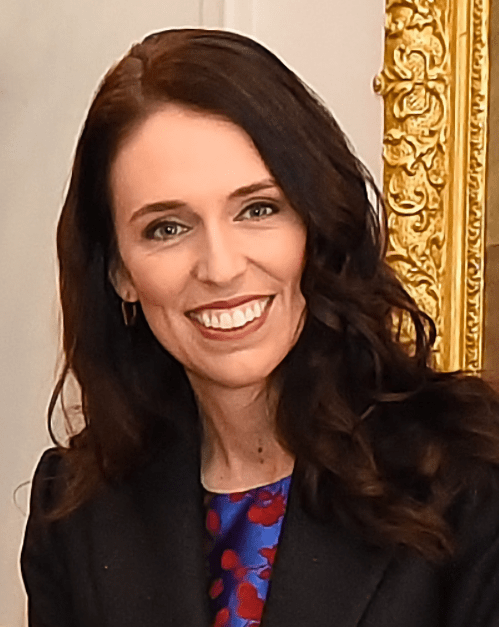
By most accounts the New Zealand Prime Minister Jacinda Ardern is handling the pandemic crisis with aplomb. She has put in place a strong and ambitious strategy aimed at eliminating the virus completely. And she has backed this up by displaying humanity and empathy.
First, let’s look at a couple of examples of her humane approach. The PM has been addressing her citizens in a direct but down-to-earth manner. Here she is towards the end of March having an informal evening chat from her home after putting her young daughter to bed.
Jacinda has also recently revealed that in the past she used to work as a check-out assistant in a supermarket. She said:“I can tell you that it is a thankless job at the best of times. I cannot imagine what some of those individuals will have experienced in the last few weeks.”
This is a useful nudge for all of us to remember to thank the staff in our supermarket when we next go to stock up.
Now let’s turn to New Zealand’s strategic approach in combatting the virus. The country is pursuing an elimination strategy to try to get the virus under complete control. The approach has a strong focus on border control, which is obviously easier to apply for most island states. You can read about the strategy here in this detailed blueprint outlined by some of New Zealand’s leading epidemiologists.
At present the ambitious strategy would appear to be showing signs of working. There are currently only 1,312 cases with just four deaths.
However, such containment measures come with a heavy social and financial cost. Recently the OECD (Organisation for Economic Co-operation and Development) predicted that initially New Zealand may suffer a drop of up to 30 per cent of its GDP. This is partly due to the loss of international tourism given its tight border controls. The government’s view though is that the health of the people comes first. In any case it says if the virus is brought under control then that will enable the economy to rebound quickly.
I have always admired New Zealand ever since I first visited both North and South Islands way back in 1984. I didn’t visit again until the end of November 2019 when the coronavirus was already starting to circulate in Hubei province in China.
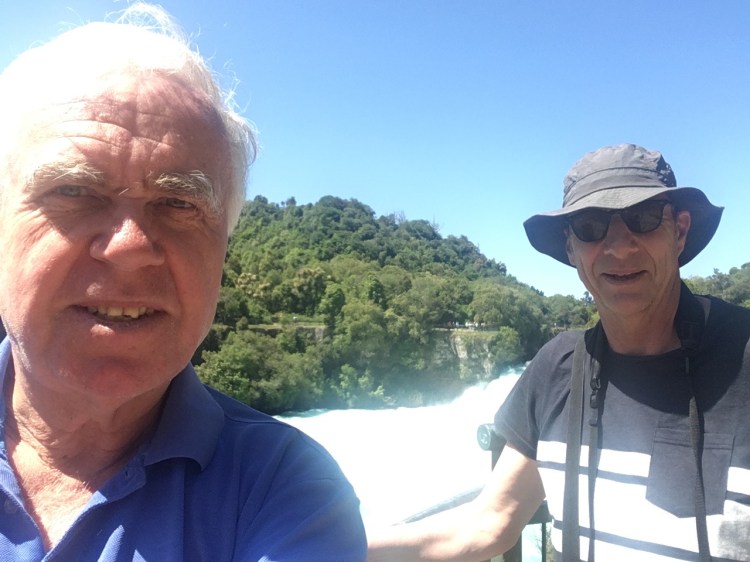
In my most recent trip I was able to catch up with an old friend John and together we visited the impressive Huka Falls near Lake Taupo on North Island. Since the pandemic went worldwide he’s been giving me regular updates about New Zealand’s response.
Selfie with John at the Huka Falls (Photo:Keith Bowers)
John was born in the North Island town of Morrinsville where Jacinda Ardern grew up. He told me how her government had cracked down hard from the start.
“In mid-March I was in the South Island competing in a radio-controlled sailing regatta involving 28 competitors and about the same number of volunteers. There was talk of social distancing but only a few took it very seriously…..During the event we heard the Prime Minister had announced that all travellers coming in the country must self-isolate for 14 days. At that stage NZ had only EIGHT cases. It seemed like a big step…
John has supported the even tougher measures announced since then.
“My respect for Jacinda has gone up enormously during this crisis. She has been decisive, and communicates exceptionally well. I also think we are doing the right thing.”
Yesterday John sent me a quote from the Prime Minister, who should have the last word. She said:”In the face of the greatest threat to human health we have seen in over a century, Kiwis have quietly and collectively implemented a nationwide wall of defence.”
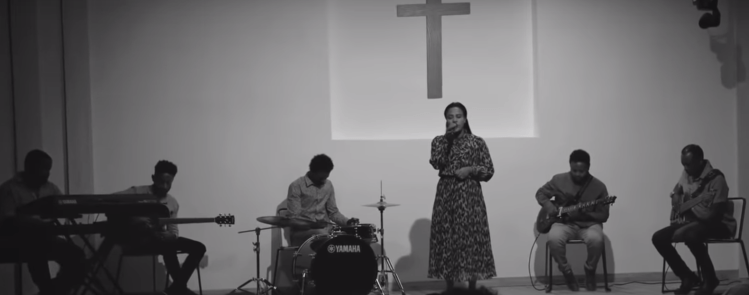
The first lady of Ethiopia singing Maren (Mercy) Image:Youtube
Ethiopia, the second most populous country in Africa, has been taking a series of dramatic actions in response to the pandemic. One of the most striking initiatives has been the release of a song by Zinash Tayachew. She is the wife of the country’s prime minister, Dr Abiy Ahmed, last year’s Nobel Peace Prize winner.
In a country of more than 100 million there are many who profess a Christian faith, including adherents of the Orthodox Church and Pentecostal denominations. The Ethiopian first lady’s song is called Maren. This means mercy in Amharic, one of the country’s main languages. It does not refer to the coronavirus directly but begs God not to abandon us during this time when the world is terrorised.
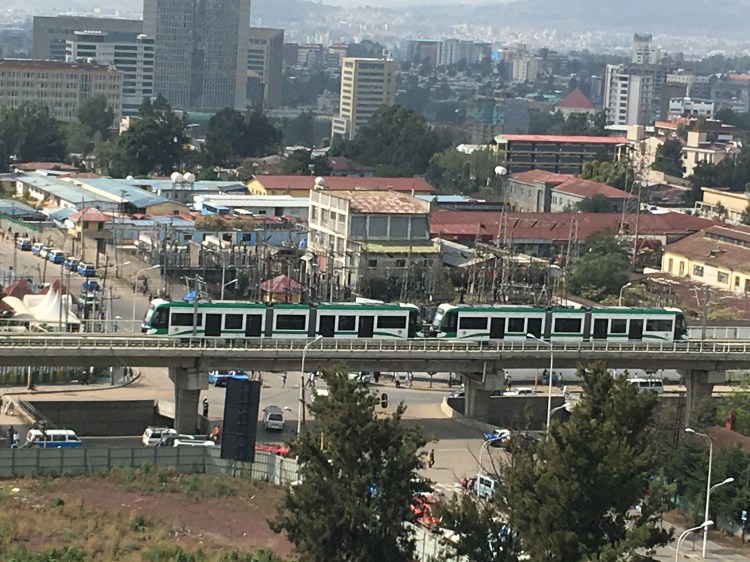
In the past week Ethiopia has suffered its first two deaths from Covid-19. However, at the time of writing there are just 56 reported cases in the country. Extensive measures are in place to try to contain the virus with schools, bars and nightclubs closed. Restrictions have also been announced on local transport, including the modern mass-transit train system in the capital Addis Ababa.
A train snakes its way through the high-rise blocks of Addis Ababa Photo: Keith Bowers
Two days ago the Prime Minister announced a state of emergency to give the government extra powers but he has already indicated there will not be a total lockdown. He is quoted as saying:”We can’t impose a lockdown like more developed nations as there are many citizens who don’t have homes…. Even those who do have homes have to make ends meet daily.”
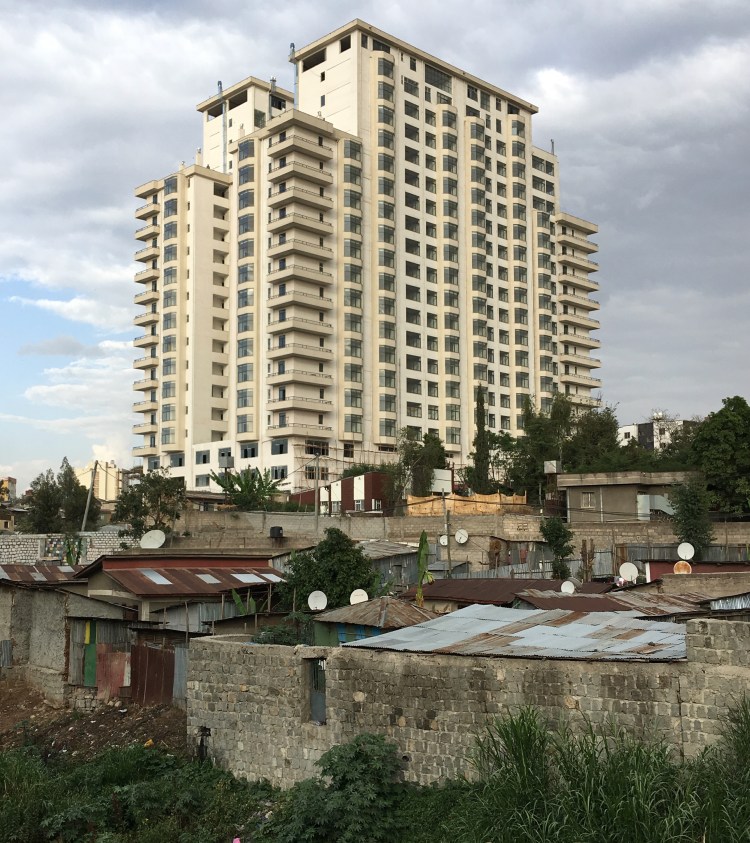
I have been to Addis Ababa many times and so have seen first-hand how many poor people struggle to eke out a living on the streets. Although the Ethiopian economy has been growing at a fast rate with a huge construction boom, there are still many who have nothing.
The well-off and the poor often live cheek by jowl Photo:Keith Bowers
Some international observers have been puzzled that the figures of Covid-19 in Ethiopia are so relatively low. A range of factors has been suggested as possible explanations. These include: the under-reporting of cases, the fact that the population is made up of a very high proportion of young people, and that the local intense ultraviolet levels may somehow be suppressing the virus.
However, there is as yet no definitive scientific explanation. As a result, the authorities in Ethiopia are taking nothing for granted and are preparing for the worst. One big concern is that the medical system in Ethiopia will come under great pressure if the virus spreads exponentially.
Little wonder then that the Ethiopian Embassy in London has launched an international appeal for financial and practical help. You can read about it here.
In the last few weeks I have come to regard Dr Bharat Pankhania, an expert in communicable diseases, as a kind of trusted friend. Recently he has been appearing regularly on the regional programme I watch, BBC Points West, which is produced in the city of Bristol not far from my home. The doctor has a very engaging warm manner. He routinely despatches sound and accessible practical advice in answer to viewers’ questions about the coronavirus.
Yesterday I discovered the doctor lives in my home city of Bath. He is also a local councillor for the area of Combe Down, on the top of a nearby hill where I regularly go hiking.
Dr Pankhania is now a Senior Clinical Lecturer at the University of Exeter Medical School. He has extensive experience in working in public health, especially in the control of communicable diseases. So he knows his stuff.
I was intrigued to see the doctor take part in yesterday’s first edition of the Covid Report – a citizens-led attempt to hold the UK government to account. He appeared alongside three professors and the ex-chair of the British parliamentary health committee.
In this appearance, which has been circulated via a video on youtube, Dr Pankhania adopted a much tougher tone than I have seen before. He said he was baffled at the level of unpreparedness in the UK over the last three months. He couldn’t understand why more hadn’t been done in testing for the virus in the community. And why we had not seen the setting up of sustained and extensive local contact tracing as practised in China, South Korea and other Asian countries.
During the programme there was criticism of what was seen as the government’s over-reliance on modellers and behavioural scientists, and not taking enough account of public health experts.
Some may see an initiative such as the Covid report as being somewhat disloyal when the whole nation should be pulling together to tackle the virus. Others will say that we live in a democracy and our government’s actions should be closely examined so they can be improved where necessary.
Why not judge the programme for yourself? You can watch it here.
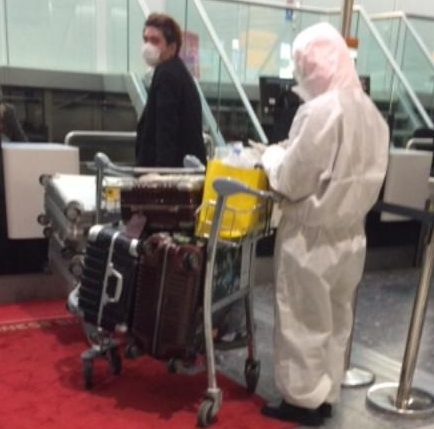
This was the startling and alarming image I received from my friend Stephen as he and his wife Vera were checking in at London’s Heathrow airport on 17 March. They were at the start of a long journey to Australia. At the time international flights were vastly reducing because of the growing spread of the pandemic. The very cautious passenger in the hazmat suit ended up sitting near Stephen and Vera on the first leg of their flight to Kuala Lumpur.
You may well ask why would any sane person want to take a flight at this time. Why risk getting stuck in another country or even being turned back by Australian immigration? Well, we have to rewind a little to answer that question.
Just a few days earlier, I had managed to sneak in a lunch at a local pub near my home in Bath with Stephen and Vera, who is Norwegian. This was just before the lockdown announced by the UK government. The couple were understandably on edge as they were imminently due to be leaving the UK on a flight to Brisbane.
This was not a tourist trip. It was a long-planned journey to help their daughter Lynn who had just moved to Australia and was due to have a cesarean on 25 March. It was to be her third child. Stephen and Vera were keen to help Lynn’s husband Andrew to look after the other two small children, Christine and Elisabeth.
As we left the pub after an excellent lasagne, Stephen and Vera were understandably jittery as to whether their flight would be allowed, given the increasing restrictions on international travel due to the pandemic.
A couple of days later their check-in experience confirmed the trip was on. Against the odds they managed to get all the way to Brisbane. Of course, due to tightening Australian health restrictions, Stephen and Vera had to self-isolate for 14 days when they arrived at their daughter’s house. This meant their original hopes of being a big help were dashed, at least initially.
Stephen sent me daily updates of their trials and tribulations over the next three weeks or so. There was plenty of pain, frustration and worry and also in the end, hope, joy and triumph. I have put Stephen’s messages together in diary form. You can read it by clicking here or on the diary tab on the menu bar on my home page. I hope you find their intense experience an inspiration.
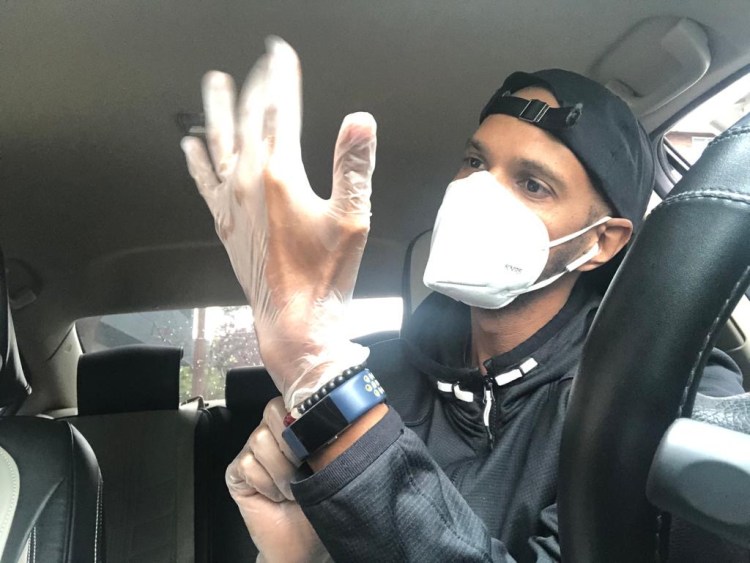
California calling. This was my friend Yemane’s safety routine yesterday before setting off on a shopping trip in the northern suburbs of Los Angeles. The city has been in lockdown since last month and Yemane has been taking precautions for some time when he goes out for essential supplies. However, last week the LA city mayor urged everyone to cover their mouths and noses by using home-made masks such as bandanas. The mayor’s message is now being echoed by the authorities all across America.
It’s not just in the United States that mask-wearing by the general public is becoming a big issue. Scientific opinion appears to be shifting. Many now believe that wearing masks may be effective in preventing virus droplets being spread, especially by individuals who are asymptomatic. Over the weekend the authorities in Lombardy region, one of the epicentres of the pandemic in Italy, passed a law requiring citizens to wear some sort of face protection.
Elsewhere in Europe friends in the south of France and in Madrid told me yesterday that they had been wearing some sort of face protection for some time – along with many other citizens in their countries. I even had a call from a friend in Ethiopia saying people there were using whatever material they could to cover their faces and berating me for not doing the same here in the UK.
All this activity has partly been sparked by a change of heart by the World Health Organisation. In the past it has been reluctant to sanction the widespread wearing of masks during epidemics. This is partly because people might try to buy up supplies of surgical-type masks badly needed by front-line health staff. However, at the end of last week a senior WHO spokesman said:“There may be situations where the wearing of masks may reduce the rate at which infected individuals infect others.”
The face mask drum has been beaten for some time by the Czech Republic which has mandated all its citizens to wear them. Another friend in Ethiopia sent me a link to this very powerful public service video from the Czech Republic. It urges the world to follow its example in promoting face coverings.
All this comes as no surprise to residents of East Asia where mask-wearing has been a feature of public health etiquette for many years. I remember being surprised on my first work trip to the region – to Japan in the early 1990s – when I saw many people wearing cotton masks because they had a common cold or flu. It is all part of the region’s societal outlook that individuals are keen to go the extra mile and not to harm others by passing on infections.
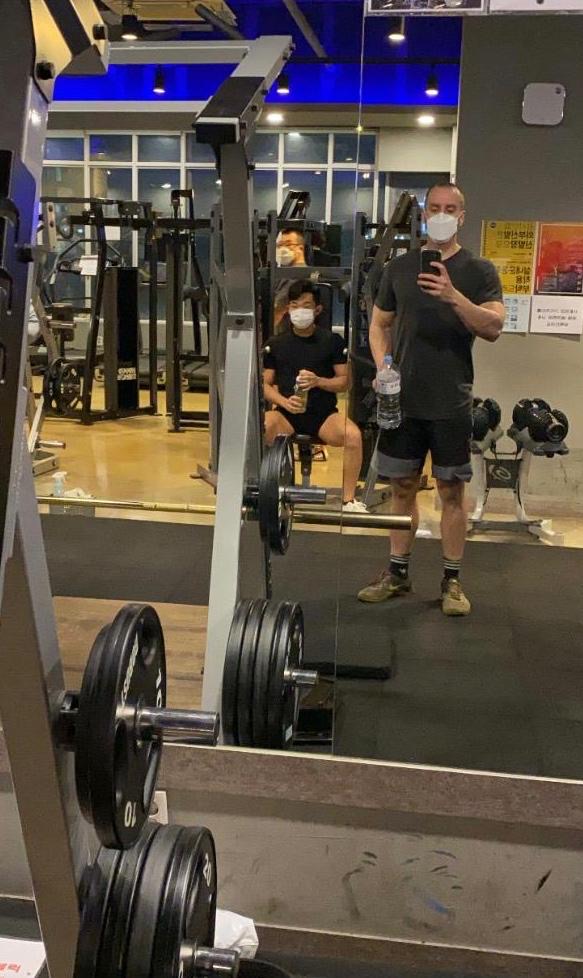
During the current pandemic I have heard regularly from both my sons who currently live near Seoul. They tell me virtually no-one goes out on the streets in South Korea without some sort of mask. One son, Tim, tells me it is compulsory to wear a mask while exercising in his gym even though it’s awkward while working up a sweat. Most gyms, leisure centres and restaurants have remained open throughout the crisis in South Korea – but that’s another story which I hope to tell in a future blog.
If Tim’s mask should happen to slip while pumping iron, a beady-eyed instructor will come over and scold him to ensure his nose and mouth remain covered up.
Tim pauses for a selfie during his workout
Some countries of course are not yet advising their citizens to use face masks. Unprompted, I had an email from friends in Australia this morning, who told me friends in the US had offered to send them some face masks. They had politely turned down the offer as the local authorities do not recommend wearing them as the benefits are not proven. Some say home-made masks are unhygienic, can lead to a false sense of security and distract people from social distancing.
The British government is taking the same line as Australia. The deputy chief medical officer for England, Professor Jonathan Van-Tam, was asked about this issue last Friday at the UK government’s daily briefing. He stated baldly that there was no evidence that mask-wearing by the general population stopped the spread of the disease.
As a result, the British government was not recommending this policy. You can see the Professor’s brief remarks here. It is certainly not part of the British cultural make-up to wear cotton masks in public. During my rare visits to my local supermarket I have seen only a few people wearing one.
This is actually a much complex issue than it would appear. It has been debated by scientists for many years. However, it’s worth noting two other contributions to the discussion.
One was a comment by the medical magazine, the Lancet, which said that the lack of evidence is not the same as evidence of absence. And it’s worth reading in full this recent influential research paper by scientists at Yale. They are now strongly shifting the argument in favour of wearing face masks during the Covid-19 outbreak.
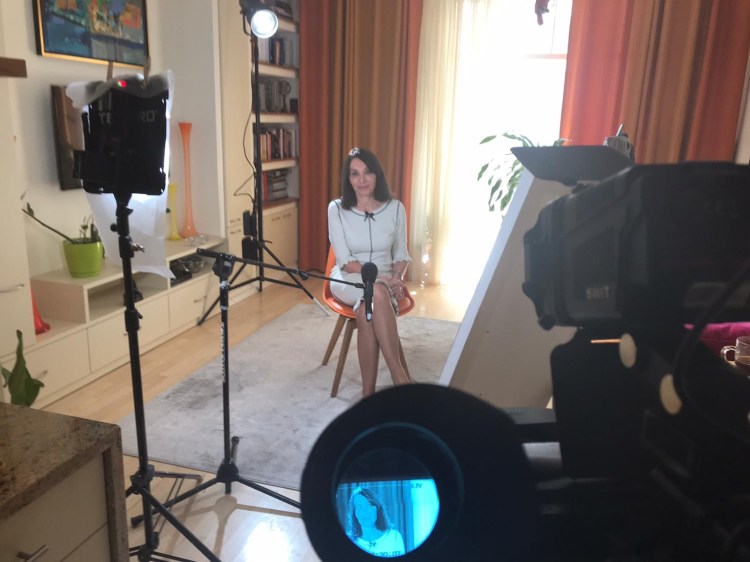
Around the world we are seeing television presenters being forced to broadcast their programmes from their homes because of the lockdowns imposed during this pandemic. Ewa Ewart who lives in the Polish capital, Warsaw, is one of those presenters.
She works for TVN24, the news channel of the country’s largest commercial television station, TVN, which is owned by the American Discovery network. I have known her for nearly 30 years as she is a colleague and friend from our BBC days.
Ewa is now a household name in Poland, a country of around 38 million people. She regularly presents a programme which showcases the best current affairs documentaries from around the world.
Recently Ewa was anxious to find a reliable documentary which reported accurately from Wuhan in China on the growth and spread of the virus. The Polish government announced a total lockdown on 20 March when the country had relatively few cases. This took many of the population by surprise as there was not widespread detailed knowledge about the pandemic.
Since then many Poles have been left bewildered by a torrent of alarming headlines showing the medical and economic repercussions of the strict stay-at-home measures. In a country where a hard-line communist system held sway just a generation ago, many citizens remain suspicious of the actions of the authorities.
Ewa and her team eventually chose a documentary called Coronavirus. It was originally transmitted by the Four Corners programme on the Australian public broadcaster, the ABC. You can watch it here. This is Ewa’s own account of the impact of that programme on her audience in Poland when it was shown at the end of March.
“The film gained unprecedented access to the quarantined city of Wuhan, its people, doctors, and trapped foreigners. It reveals what happened in the city, what was the most likely source of the virus, and how the population coped under the siege.
The reaction of the Chinese authorities in muzzling doctors who first warned about the appearance of a strange illness is the single most crucial element of the film’s narrative.
It raises this question. To what extent is any information coming from China about the coronavirus credible? Can we believe the official narrative that the country got its epidemic under control when it became evident that China had withheld the truth at its initial stage, depriving many countries of the opportunity to better prepare for a virus attack?
For me, the highest value of this documentary is in the powerful message it sends to those who are at the epicentre of the epidemic today, especially to those in power: Don’t lie. Be transparent in your actions and tell the truth, regardless of how unpalatable it is. Throw your efforts behind helping and supporting the doctors and other healthcare providers. Today, nothing else matters.
Above all, don’t put politics and your political ambitions above human health and life.
I was overwhelmed by the reaction of my TVN24 viewers. Poland right now is in the very grip of the epidemic. There is a serious worry that we might be heading towards the Italian scenario. Many wrote to me, saying how familiar some parts of the narrative sounded to them.
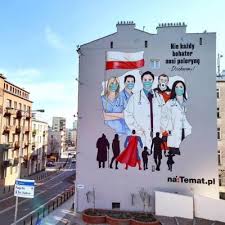
A couple of days later, I spotted a new, massive mural in the centre of Warsaw. It shows a team of doctors and nurses covered by masks. Next to them, there is an iconic figure of Superman wearing his famous red cape. The words that go with this image read: “The most vulnerable are those who care about our health and life in the pandemic era. We painted this mural to thank you. Why? Because real heroes do not wear capes.”
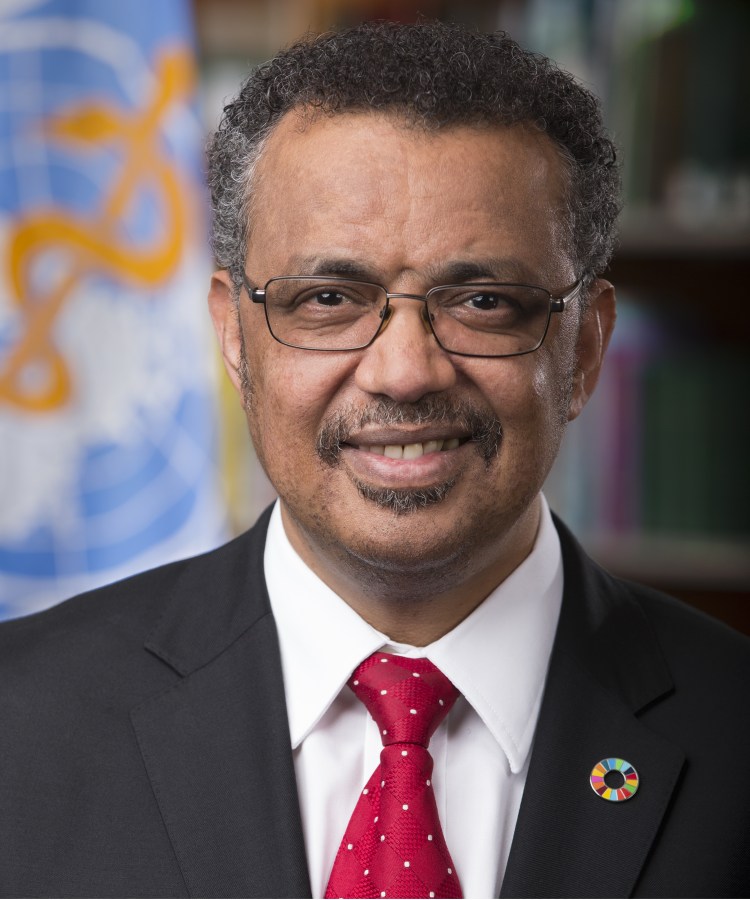
Dr Tedros Adhanom Ghebreyesus (official WHO photo)
One of the international public figures thrust into the limelight during this crisis has been Dr Tedros Adhanom Ghebreyesus, the Director-General of the World Health Organisation. We’ve got used to him appearing on our screens telling the world to test, test, test. Many have praised his interventions.
However, Dr Tedros has faced criticism for being too effusive in congratulating China on its aggressive efforts to contain the virus in Wuhan. Some also believe he may have been too slow in declaring the outbreak as a global pandemic.
I know of Dr Tedros from Ethiopia where he was the health minister and then foreign minister before taking up the WHO job. But he also has a strong abiding link to the UK. I discovered this when I was part of a production team which met him several years ago in the Ethiopian capital, Addis Ababa.
Dr Tedros gave us an interview about his enduring gratitude to his academic alma mater, the London School of Tropical Hygiene and Medicine. He was affable and approachable as others have witnessed. But, of course, a range of more steely attributes is needed to withstand the pressures of his current position.
However, the WHO is clearly much more than its top leadership. Its experts have been at the centre of handling this pandemic from the start. They have facilitated some vital international co-operation in fighting the disease.
The WHO’s relations with China have been crucial. As we know, at the end of last year, the Chinese government covered up the existence of the virus. Eventually though it did come clean by informing the world, via the WHO. This short WHO document gives an authoritative primary source record of the timeline of these contacts.
The timeline shows that China first notified the WHO Beijing office about the emergence of a new virus on 31 December 2019. But crucially, on 12 January this year, China passed on to the WHO details of the genetic sequencing of the coronavirus. This enabled scientists across the world to develop tests for it. To start early work on a vaccine and begin to examine whether some existing antivirals could mitigate the effects of the virus.
Another crucial document from the WHO is this mind-blowing report from one of its teams of medical and scientific experts. They visited China in mid-February to examine the drastic methods used to contain the virus. The draconian tactics involved introducing immediate and extreme measures. Locking down Wuhan and greatly increasing the number of ICU beds and protective equipment in the city. And, in the rest of China, employing ambitious radical initiatives to prevent the spread of the virus through rigorous, speedy testing and mass contact tracing.
Several of these authoritarian and highly-intrusive measures made many democratic governments squeamish at the time. But the world had been warned that desperate times needed desperate measures. Did enough countries take note early enough?
If you do read this WHO report on the Chinese approach, I suspect that, like me, you may well have some subdued moments of reflection. Perhaps you may come to realise, like I did, how much effort and sacrifice all of us may have to continue to make if we are to contain the pandemic.
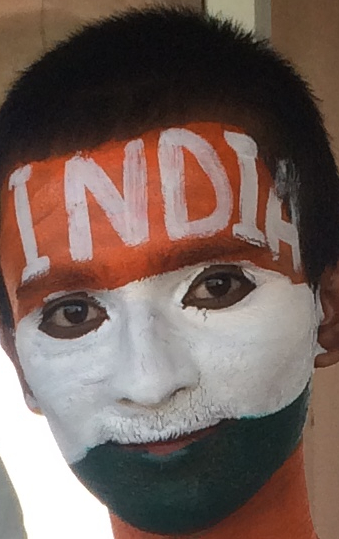
This is a passionate young Indian cricket fan in November 2016. I took his photo while watching a match between India and England in the city of Rajkot in the state of Gujarat. On the first day of the game the crowd’s attention was distracted by two seismic simultaneous political events happening outside the stadium.
Donald Trump was elected as President of the United States.
Closer to home, the Indian Prime Minister Narendra Modi had caused mayhem and panic across his country by a draconian overnight announcement. He had decreed with immediate effect that all 500 and 1,000 rupee notes (around £5 and £10) would no longer be legal tender.
It was a drastic move aimed at stamping out corruption and illegal cash holding. Much of India descended into chaos. Millions of desperate citizens queued outside banks as they struggled to adapt to the new regulations.
It was clear to me then that Mr Modi is not one for half measures. And he revealed his decisive and bold streak again just over a week ago. Then he announced an immediate 21-day total lockdown across the whole of India in a bid to contain the spread of covid-19.
We have become used to witnessing many jaw-dropping events during this crisis. But this has be one of the most astounding. Around 1.3 billion souls in a diverse, crowded and dynamic country ordered to stay at home with less than four hours warning. Probably the most stringent measures imposed by any democratic country during this pandemic. And they were introduced when only 519 coronavirus cases had been reported in India with just ten deaths.
It’s sobering to read the full edict announced by the Indian government. The economic and social impact of such an immediate shutdown was even more severe than what we have witnessed in the west. Millions of poorly-paid migrant workers were suddenly trapped far from their homes.
The Prime Minister took his radical decision in the face of some alarming scientific modelling. This showed there could be 300-500 million cases of the virus across India by the end of July if nothing was done.
Even more frightening was the estimate that up to 10 million people would become severely ill and need intensive care facilities. This would, of course, have totally overwhelmed India’s healthcare systems. Read this grave first-hand assessment by a leading Indian epidemiologist here.
A few days ago Mr Modi spoke frankly to the nation in his regular radio address called Mann Ki Baat or heart to heart. He twice apologised for imposing these harsh steps, which he acknowledged had caused great hardships, especially for the poor. Mr Modi said India was now engaged in a life and death struggle. He then uttered a Sanskrit saying: “evam evam vikar, api tarunha saadhyate sukham.” This means: “an illness and its scourge should be nipped in the bud itself.”
When I watched that cricket match in Rajkot in 2016, I met another ardent Indian cricket fan. His name is Dilip, a family man who works as a manager at the huge port of Mundra on the west coast of Gujarat. I have been in touch with him regularly since, usually to discuss our passion for cricket.
But during the current crisis we have been chatting even more frequently. In early March, Dilip told me that many Indians had been watching the spread of the virus in Europe with growing alarm. He said they could not understand why European governments were not taking immediate drastic action in closing borders and locking down affected areas.
Now Dilip is in total lockdown with his wife and two children on a compound owned by his employers. He is hoping that the extreme heat of the upcoming Indian summer might help contain the virus.
But he remains stoical and told me: “India with its population of 1.3 billion and limited health infrastructures is staring at perhaps the most crucial battle the world has to offer against this pandemic….. These 21 days of lockdown are buying us the time to prepare like never before for what may be a huge task in human history… and learn from mistakes that other countries have made and be precise with our reply to the pandemic in the best democratic way.”
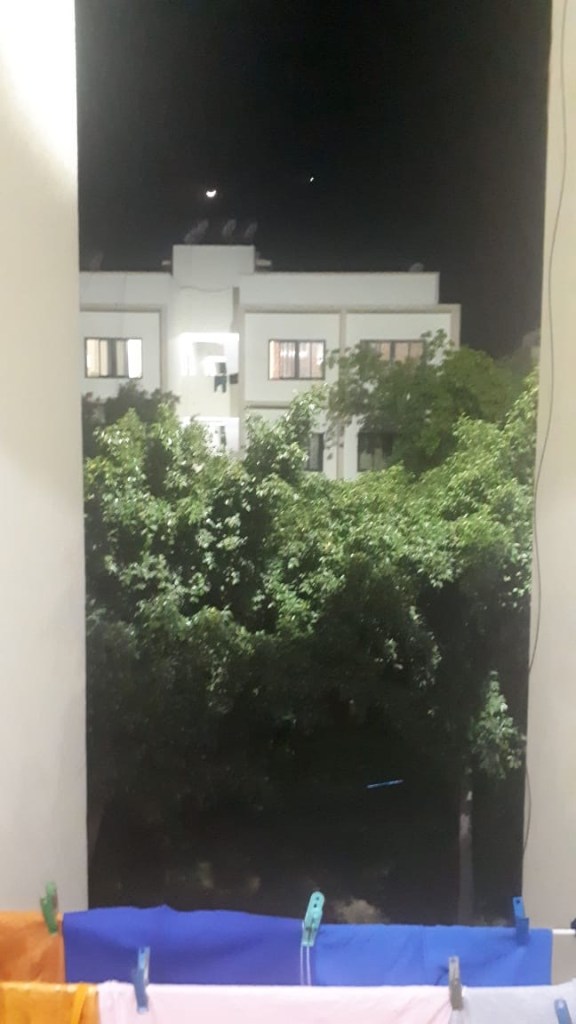
While Dilip and his fellow Indians wait anxiously to see whether Mr Modi’s extreme measures will avert a catastrophe, he is becoming used to this night-time view from his window.
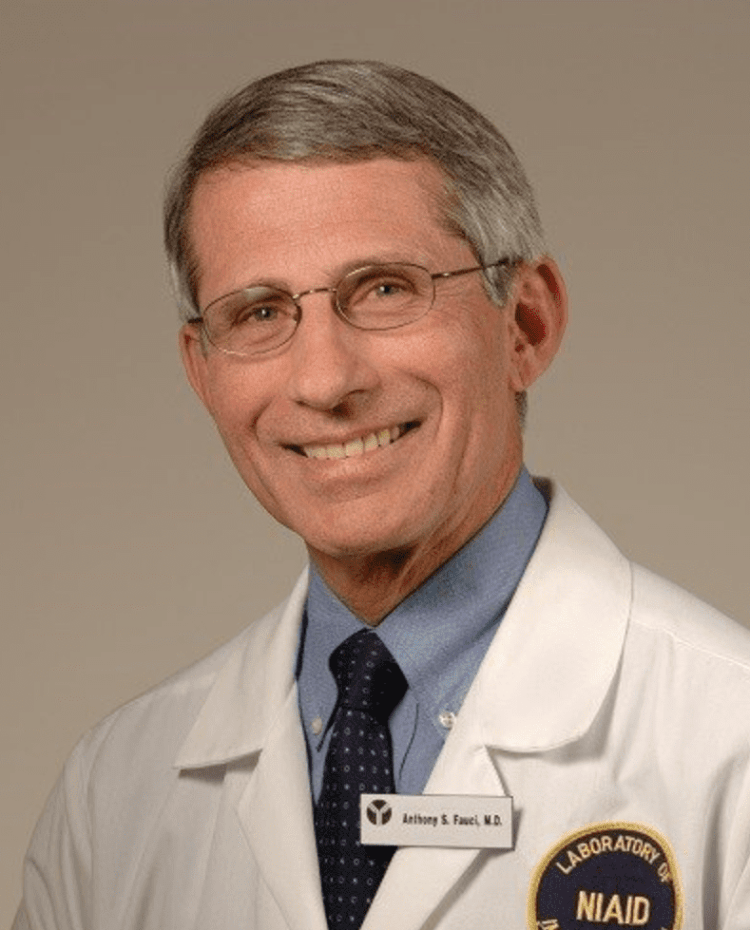
Just in case you don’t know – this is Dr Anthony Fauci. He’s the director of NIAID, the National Institute of Allergy and Infectious Diseases in America. He is right at the centre of the pandemic hurricane sweeping across the United States, which now has by far the largest number of covid-19 cases in the world.
The doctor is America’s leading medical guru, regularly speaking from the podium during the White House’s briefings about the virus. He is an amazing guy fizzing with energy. Still a keen runner at the age of 79. A medical expert with an inspiring track record, especially in the fight against HIV/AIDS in the 1980s.
I have watched several of Dr Fauci’s public performances over the past few weeks. He routinely tells the American people the raw hard facts about the dramatic impact and progress of the pandemic.
This would be a difficult enough task on its own. However, the good doctor also has to tread carefully. His judgments can frequently be at odds with the political and economic priorities of President Trump’s administration. I recommend this recent in-depth interview with Dr Fauci in Science magazine. Here he gives a fascinating horse’s mouth assessment of his delicate but crucial role.
Apart from the occasional mis-step, Dr Fauci is still a positive influence on the future direction of America’s pandemic policy. However, he is increasingly coming under criticism by voices on the left and on the right keen to push their own political agendas. Maybe you would like to see the good doctor in action and judge for yourself. If so, watch this 15-minute news-making interview he gave to CNN last Sunday.
It’s heartening to see that all over the world scientists are collaborating and coming to our rescue. Leading scientific and medical experts across the globe are becoming reassuring public figures. Of course, they are not infallible but they are the best lifeline we have.
In the UK there is Professor Chris Whitty, the Chief Medical Officer, and his deputy, Dr Jenny Harries. And they are not alone.
Check out this inspiring roll-call of emerging trusted medical voices in the rest of Europe and Australia.
 globalwindow