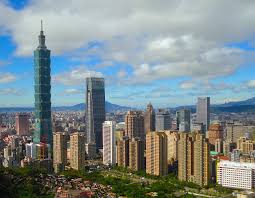
As countries in Europe move warily to lift some of their lockdown measures, Taiwan’s handling of the pandemic continues to stand out. The Taiwanese government has reported only 440 cases of Covid-19 in total with just seven deaths.
I have been puzzled for some time by these dramatically low figures and why we have not heard a lot more about them. We know a little about some of the possible reasons, including Taiwan’s experience in fighting SARS, and early testing and rigorous contact tracing. But I wanted to find out more.
As a result, I have been reading the Taiwan government’s own description of what it calls the Taiwan Model. It’s well worth reading all the seven short articles covering issues such as Taiwan’s advance planning and its early responses to the pandemic. Of course, these official papers put the best gloss on Taiwan’s approach. But it seems hard for anyone to ignore the conclusion that its apparent success so far has been characterised by bold, rapid, and decisive interventions.
Taiwan sprang into action as soon as China alerted the WHO on 31 December last year that an unknown respiratory disease was circulating in Wuhan. Despite Taiwan’s complex and tortured political relationship with China, there are extensive business and other contacts between them.
The Taiwanese government was therefore immediately alert to the danger of the disease spreading. Straight away it announced measures to begin screening passengers arriving by plane from Wuhan. Just two weeks later on 12 January a public health team from Taiwan was allowed to visit the centre of the outbreak. It concluded this was a dangerous virus likely to be transmitted by human to human contact. After this there were no half measures in Taiwan.
In Europe we have heard a fair amount about the lessons to be learned from South Korea and Singapore where the pandemic has also been contained to some extent. But my impression is that Taiwan’s experience has not been examined in as much detail. Could this partly be because Taiwan is seen as something of an outlier because it only has diplomatic relations with a few countries in the world?
Taiwan is not recognised by the UK and the EU as an independent country. They back China’s claim that the island of Taiwan is part of its territory under the One China principle. Has Taiwan’s blueprint for success in handling the pandemic therefore been somewhat out of sight and out of mind?
Taiwan’s wish to exchange detailed information about fighting the pandemic is further complicated because it is not allowed to be a member of the UN. It is therefore not part of the WHO. Taiwan used to have WHO observer status but this was suspended following objections by China amid rising tension in recent years between Beijing and Taipei.
All this diplomatic strain is coming to a head as Taiwan has requested to take part as an observer in a major WHO meeting next week. President Trump is using this as an opportunity to put pressure on China, which he claims is dominating the WHO. Although the US does not recognise Taiwan, they do share a defence agreement in what’s known as a policy of strategic ambiguity.
The United States, which has currently suspended its funding to the WHO, is now pushing for Taiwan to be granted WHO observer status. Australia and New Zealand have declared their support but the issue remains fraught. See this article in the South China Morning Post.
It remains to be seen whether the lessons for international public health from the Taiwan Model will continue to be largely lost amid a welter of political and diplomatic bickering.
 globalwindow
I was surprised to read that a Taiwanese team was allowed access to Wuhan. Complex relationship between Taiwan and the mainland apparently.
LikeLike